Psalm 97
The Lord Reigns
From this morning at church
I was praying this morning about what to bring to the group, and the message at church landed on the same soil. Start here. Then we'll read the psalm together.
The bigger picture
This psalm is built around one question every honest heart actually asks:
Verse 1 makes a wild claim. God is King right now, and even the farthest corners of the earth should celebrate. Everything that follows is the psalm's answer to the obvious objection: but I don't see it.
The answer comes in five moves:
- The announcement (v.1)God is King. Now. The invitation to rejoice reaches the "coastlands", the forgotten edges, including the ones in your own life.
- The hiddenness (v.2)The reason you don't see it clearly: clouds and thick darkness are around Him. But underneath the cloud, the throne has a floor. That floor is rightness and justice. The world is not random, even when it looks chaotic.
- How His reign actually shows up (v.3 to 6)Not as a visible ruler. It arrives as fire that burns off what's false, lightning that flashes clarity, mountains that melt into wax, and heavens that keep announcing what's true.
- What happens to the competition (v.7 to 9)Anything finite we were trusting with infinite weight gets exposed as hollow. The people who waited on God are quietly vindicated.
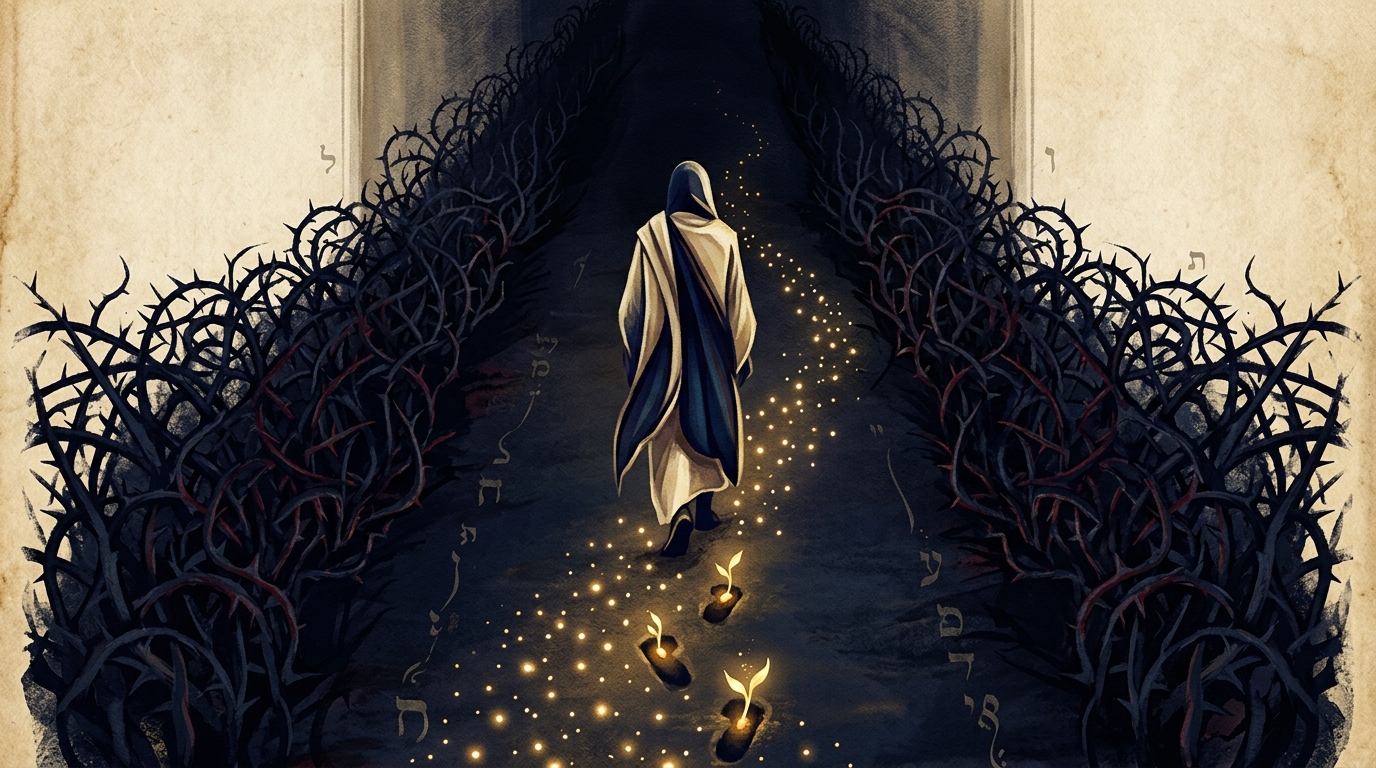
- How to live inside this reality (v.10 to 12)Love God, hate evil (they come together). Don't be afraid, because He protects you. And here is the surprise of the whole psalm: light is sown, not shined. It grows slowly, in dark soil, in your unseen faithfulness. But it grows.
God really reigns, but His reign grows like a seed in dark soil. What looks like concealment turns out to have been cultivation all along.
Verse 11 is not a pretty ending. It's the payoff the whole psalm has been building toward. Every image before it (thunder, fire, melting mountains, shame-faced idols) exists to help you trust this one quiet promise: the King's light is not a spotlight overhead. It's a seed underfoot.
How each verse serves the whole
| 1 | God reigns, everywhere | The claim the rest of the psalm defends |
| 2 | Hidden, but grounded | Explains why we don't see clearly, without letting us despair |
| 3 | Fire goes before Him | His presence burns through what's false |
| 4 | Lightning lights the world | Sometimes the hidden King flashes visible |
| 5 | Mountains melt like wax | What feels permanent in us is not |
| 6 | Heavens tell, peoples see | The evidence is already public |
| 7 | Idols shamed | What we over-trusted gets weighed and found empty |
| 8 | Zion hears and rejoices | The faithful are vindicated, through hearing before seeing |
| 9 | God is Most High | Nothing competes. And the word "King" itself hides a map |
| 10 | Love God, hate evil | How to live in a kingdom you can't fully see yet |
| 11 | Light is sown | The answer. The key. The whole point |
| 12 | Rejoice, give thanks | The proper response to a seed you trust to grow |
יְהוָה מָלָךְ, תָּגֵל הָאָרֶץ; יִשְׂמְחוּ, אִיִּים רַבִּים׃
The Lord reigns, let the earth rejoice; let the many coastlands be glad!
Go deeper
"The Lord reigns": present tense, always
The Hebrew phrase is Adonai malach (pronounced ah-doe-NAI mah-LAHKH). The verb malach can mean both "He became King" and "He is reigning right now." Jewish tradition reads it both ways on purpose. God didn't start ruling at some point. He never stopped. Every moment the world keeps existing is God actively holding it together.
There's an old rabbinic saying: "there is no king without a people." Creation itself is the act of God becoming King in a relationship. You exist so that reign has somewhere to land.
"Rejoice": a word for dancing
Hebrew has several words for joy. The one here, tagel, comes from a root that means circular, whirling, dance-like joy. Not quiet contentment. More like the joy at a wedding where people start a circle dance. The psalm is saying the earth itself is being invited into that kind of motion.
"Coastlands": the forgotten edges
The Hebrew iyim means islands or distant shores. In the prophets (especially Isaiah) it refers to the far corners of the map, the places nobody really remembers. The psalm deliberately sends the news there.
Read it personally: the "coastlands" also include the forgotten corners of you. The part of your life you've quietly written off. The season you don't talk about. The prayer you stopped praying. The announcement was meant to reach those places too.
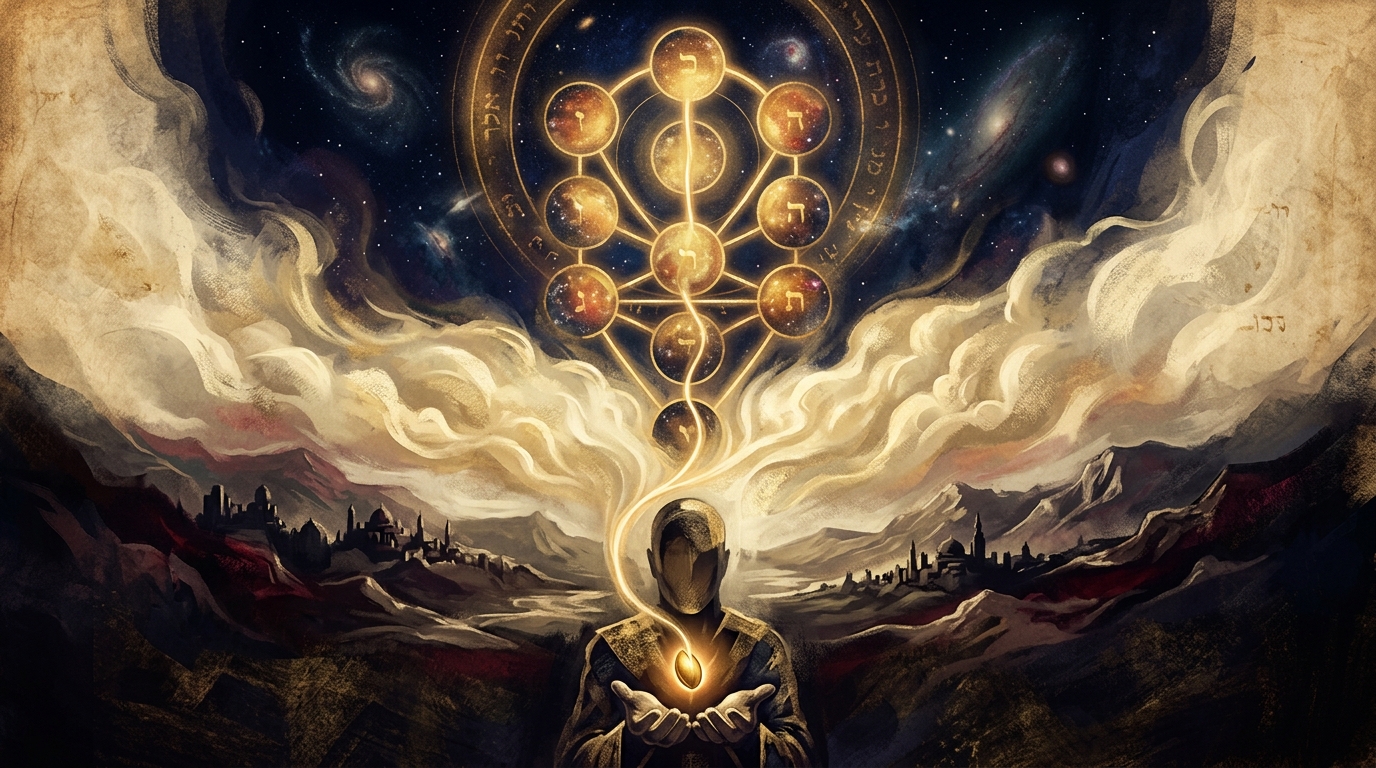
עָנָן וַעֲרָפֶל סְבִיבָיו; צֶדֶק וּמִשְׁפָּט, מְכוֹן כִּסְאוֹ׃
Clouds and thick darkness are all around him; righteousness and justice are the foundation of his throne.
Go deeper
The cloud echoes Mount Sinai
When God came down on Sinai, the mountain was wrapped in a dark, thick cloud. Afterward Moses had to put a veil over his face because people couldn't safely look at him. The darkness around God wasn't the absence of light. It was the opposite. There was so much light that a mercy had to step in so people wouldn't be harmed by it.
Jewish mystical thought has a word for this voluntary concealment: tzimtzum (pronounced tsim-TSOOM), which means "contraction." The idea is that God intentionally hides, contracts, veils Himself, so that creation has room to exist at all. If the full light showed openly, everything finite would vanish into it. So the cloud isn't punishment. It's love making space.
Sometimes the cloud around God is not a sign of His absence. It's a sign of how much He's making room for you.
"Righteousness and justice": the floor under the cloud
Two Hebrew words here: tzedek (rightness, the way things should be) and mishpat (just judgment, things being weighed correctly). Together they describe the floor the throne sits on.
Translation: the world is not running on randomness, power, or whim. Underneath the cloud you can't see through, there is a floor that is both right and fair. You may not be able to see what God is doing, but you can know He is doing it on that floor.
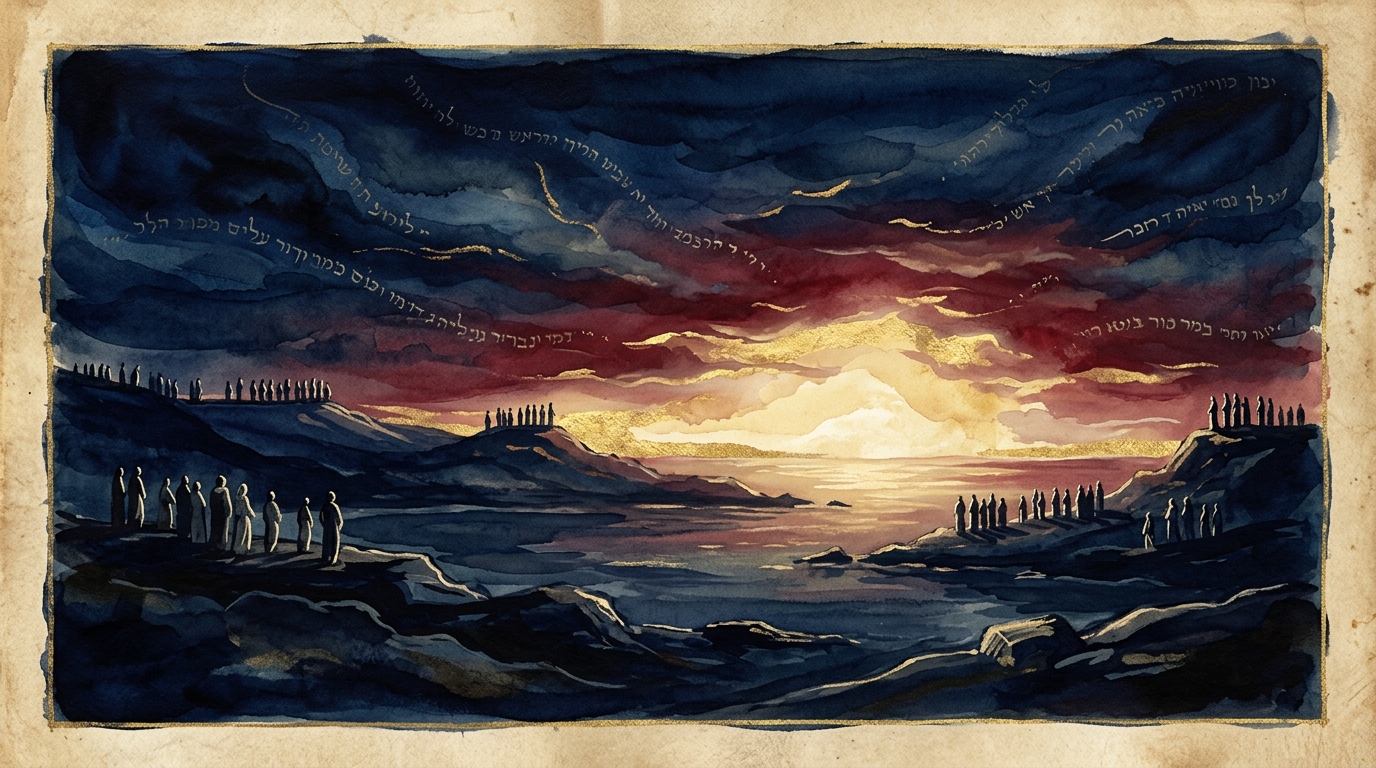
אֵשׁ, לְפָנָיו תֵּלֵךְ; וּתְלַהֵט סָבִיב צָרָיו׃
Fire goes before him and burns up his adversaries all around.
Go deeper
Fire at Sinai (again)
Deuteronomy 4:24 calls God "a consuming fire." It sounds terrifying until you think about how fire actually works. When you heat metal, the impurities burn off. The gold stays. The fire doesn't hate the metal. It sorts it.
God's fire works on us the same way. What's false in us can't survive the flame. What's true in us can. So if you find yourself in what feels like a fiery season, one of the first questions to ask is: is something false in me burning off so something truer can breathe? That's not punishment. That's refining.
"Adversaries": the shells around us
The Hebrew word for "adversaries" is tzarim, which shares a root with a word meaning "narrow" or "constricting." Jewish mystical thought calls these constricting forces klipot (klee-POHT), meaning "shells" or "husks." The idea is that truth and life in a person get wrapped in layers of ego, fear, pretense, and self-protection over time. Those shells aren't the real you. They're around the real you, and they squeeze it.
God's fire in this verse is the fire that cracks those shells open. The enemy is rarely some outside force. More often it's the crust over your actual heart.
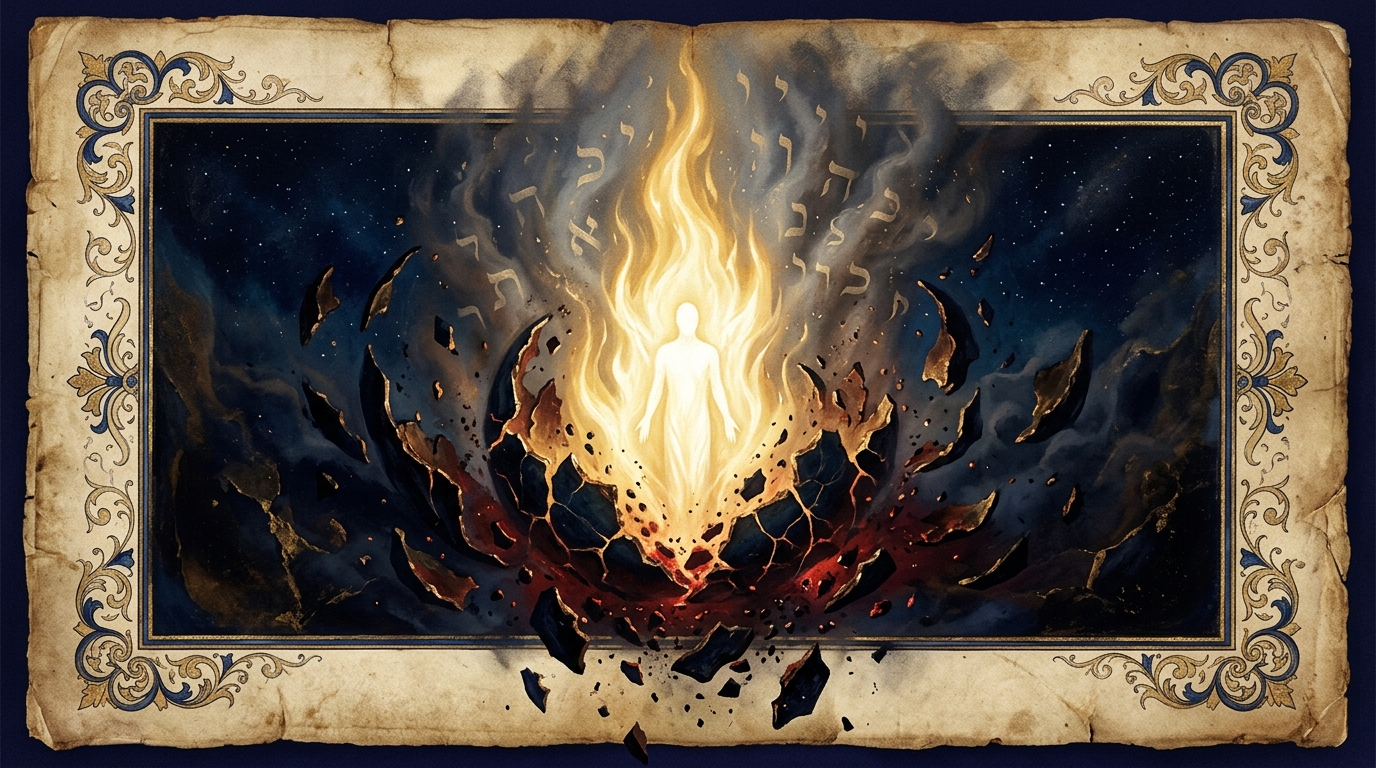
הֵאִירוּ בְרָקָיו תֵּבֵל; רָאֲתָה וַתָּחֵל הָאָרֶץ׃
His lightnings light up the world; the earth sees and trembles.
Go deeper
Lightning as revelation
In Scripture, lightning often stands for sudden insight. A flash. For one moment the whole landscape is lit up, you see what's really there, and then it's dark again. You can't manufacture these moments, and you can't keep them going. But they happen.
A conversation where a truth lands. A line of Scripture that suddenly opens up. A walk where you just know something you didn't know before. These are not accidents. They are part of how the hidden King flashes visible.
"The earth trembles": labor pains, not fear
The Hebrew verb here, chil, can mean "tremble" but it's the same word used for labor pains. The earth doesn't just get scared when light hits. It starts to give birth. Light makes the earth deliver something.
This matters for the later verses. When the light of God touches your life, something gets born out of you. Not because you manufactured it, but because light is generative. It has that effect on living ground.
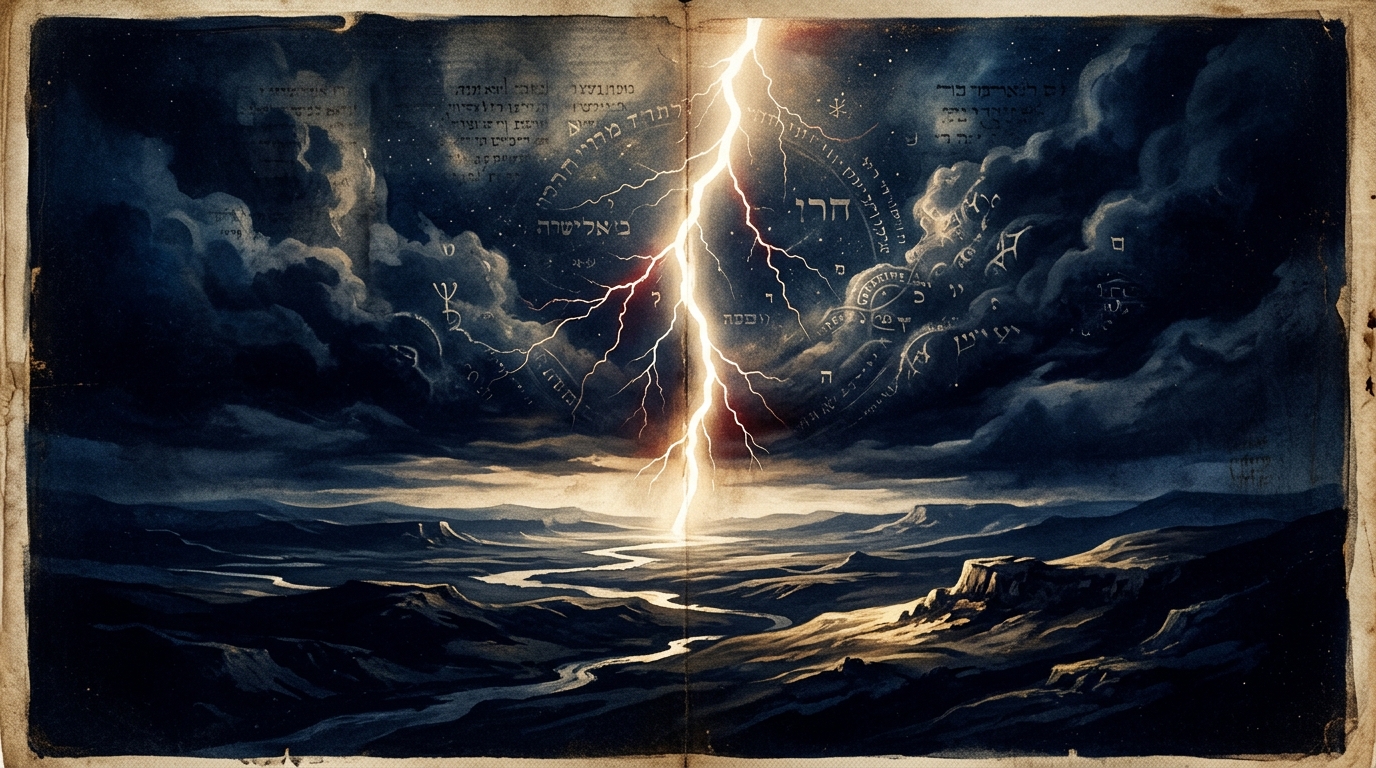
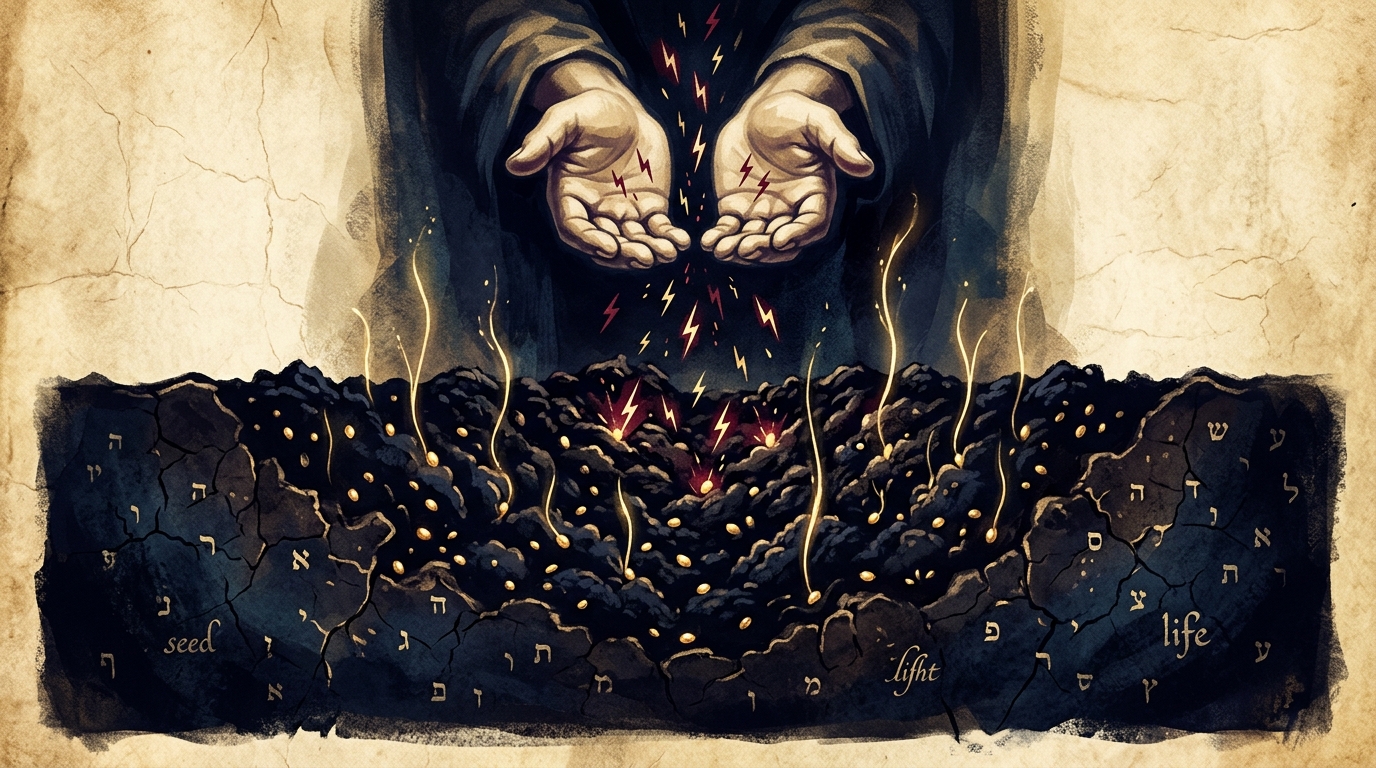
Hold this image, because it comes back in verse 11. A righteous person's actions are themselves like small lightnings, small sparks of light going into the ground. They feed the hidden seeds that are waiting to grow.
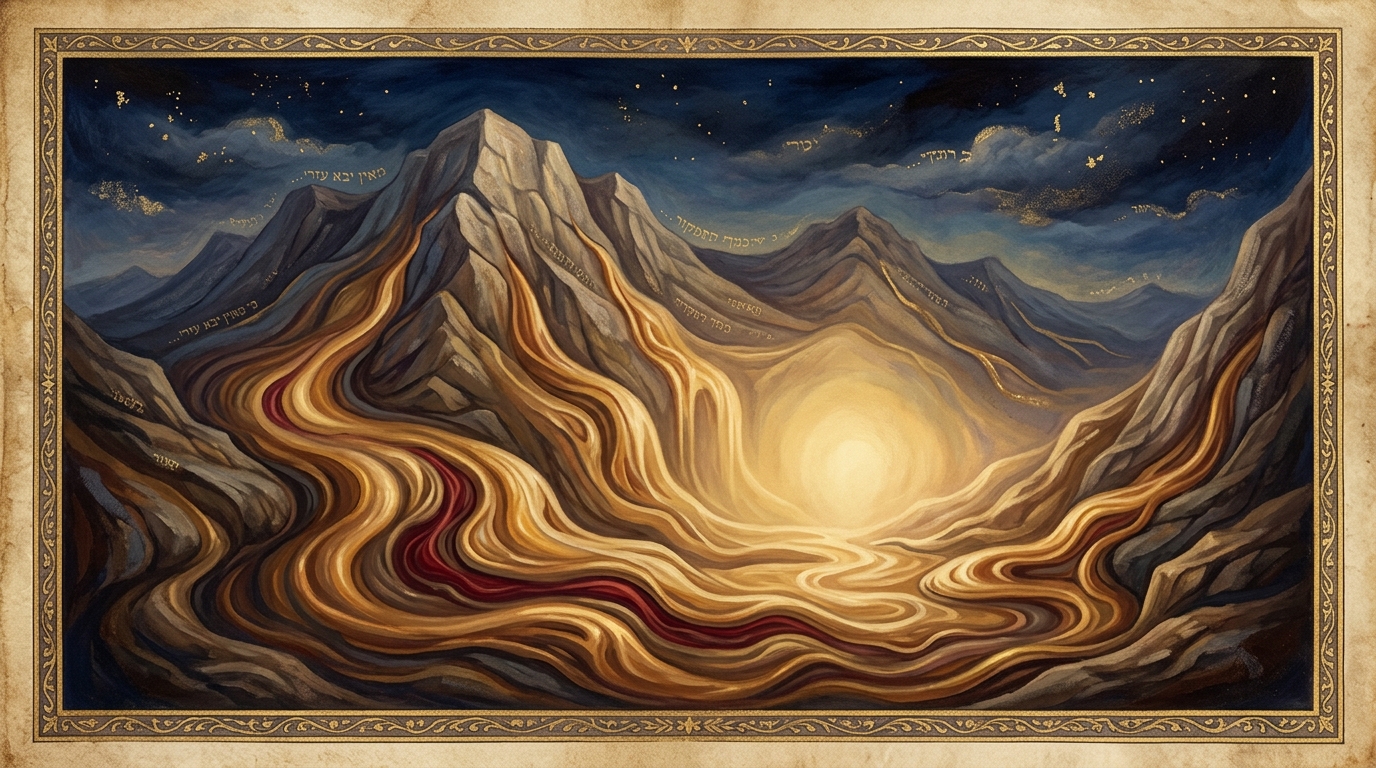
הָרִים--כַּדּוֹנַג, נָמַסּוּ מִלִּפְנֵי יְהוָה: מִלִּפְנֵי, אֲדוֹן כָּל-הָאָרֶץ׃
The mountains melt like wax before the Lord, before the Lord of all the earth.
Go deeper
Why mountains?
Mountains in the Bible are a symbol of permanence. They were there before you were born. They'll be there after. They represent the stuff that seems immovable, in the world and in you.
Except the psalm says they melt. And notice the image: God doesn't blow them up. They melt. Softly. Like wax near a flame.
Wax is a careful image
Wax holds its shape just fine. Until it gets close to fire. Then it flows. Our most stubborn places work the same way. They feel rock-solid until we actually bring them close to God. Then they start to move.
This isn't only about external enemies. A lot of what feels like a mountain in us is self-constructed: the hardened identity, the wound we won't let anyone touch, the pattern we keep repeating. Jewish mystical thought (especially in the Chabad tradition) calls the melting of this self-construction bittul (pronounced bee-TOOL). It doesn't mean self-hatred. It means the end of pretending we're the final source. Something holier is the source, and when we come close to it, our own hard edges soften.
The mountain isn't wrong for being a mountain. It just doesn't know how soft it really is until it stands near Him.
הִגִּידוּ הַשָּׁמַיִם צִדְקוֹ; וְרָאוּ כָל-הָעַמִּים כְּבוֹדוֹ׃
The heavens proclaim his righteousness, and all the peoples see his glory.
Go deeper
Creation as a standing announcement
Psalm 19 says it plainly: "the heavens declare the glory of God... there is no speech, yet their voice goes out through all the earth." Creation is a running announcement, no translator needed. The sunrise, a newborn's weight in your arms, a sudden kindness from a stranger. These are all testimony.
"Peoples see", but they only see
Watch the verbs carefully through verses 6 through 8. Here in verse 6 the peoples see. In verse 8, Zion will hear. That's a deliberate move, and we'll come back to it.
For now, notice that seeing is the first step. Noticing that something is going on. Standing at the threshold. But seeing from the outside isn't the same as receiving it inside. Plenty of people witness God's goodness all the time and stop at the threshold.
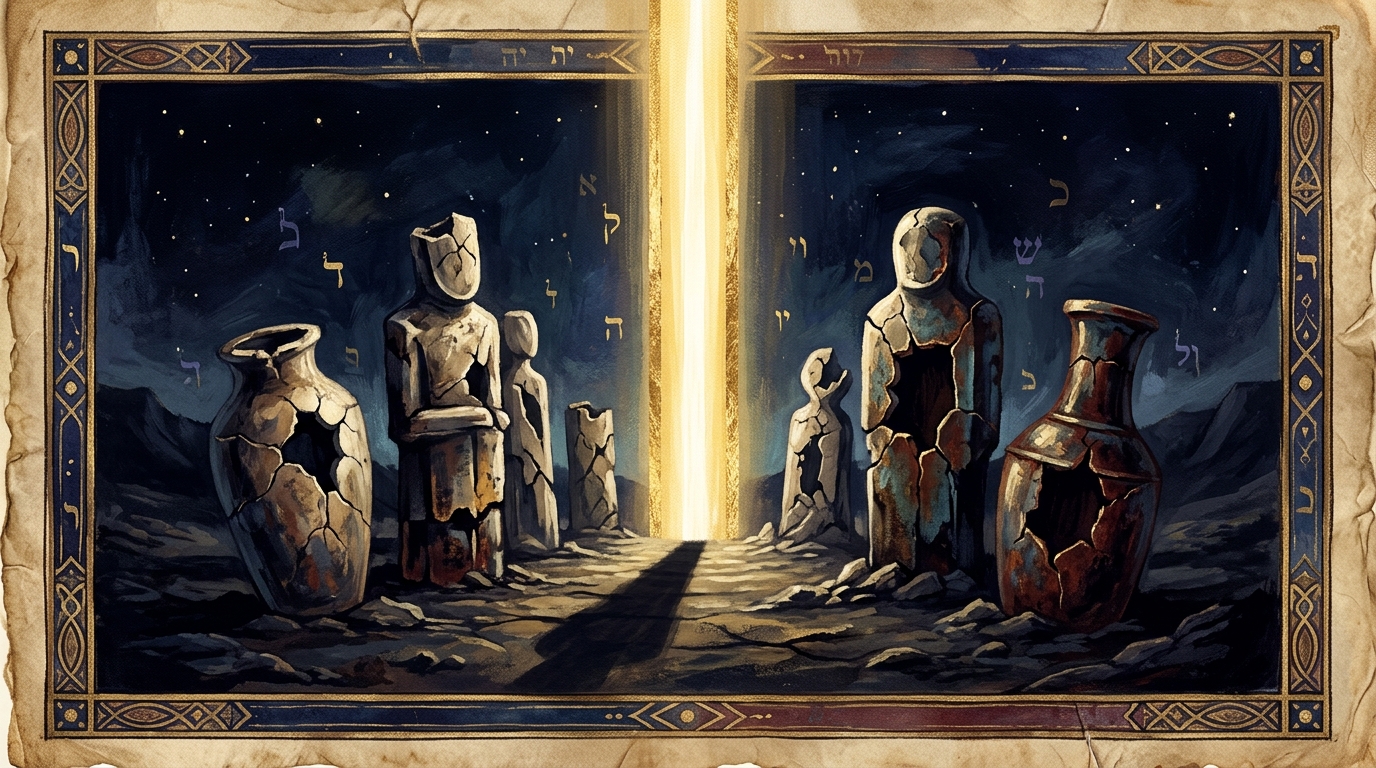
יֵבֹשׁוּ, כָּל-עֹבְדֵי פֶסֶל-- הַמִּתְהַלְלִים, בָּאֱלִילִים; הִשְׁתַּחֲווּ-לוֹ, כָּל-אֱלֹהִים׃
All worshipers of images are put to shame, who make their boast in worthless idols; worship him, all you gods!
Go deeper
"Idol" means a cut-down version
The Hebrew word for "idol" here is pesel. It comes from a root that means "to chisel" or "to cut down." An idol is literally a cut-down version of God. You take the infinite and whittle it to a size you can carry, control, and keep on your shelf.
Modern idols are easy to miss because they're rarely statues. They're the career, the relationship, the image, the ideology, the self-concept. Anything we've given the job of saving us. None of those things are evil. They just can't hold that weight. When we ask them to, they bend, then break, then crush us.
The wordplay: Elohim vs elilim
Here's something you miss in English. The Hebrew word for God in this psalm is Elohim (eh-loh-HEEM). The word for "worthless idols" is elilim (eh-lee-LEEM). They sound almost the same. But the second one comes from a root that means "nothing."
So there are two sets of "gods" that sound alike: one full of everything, one full of nothing. The shock of the verse is how easy it is to mistake one for the other. Idols feel like fullness until the day they don't, and then you realize they were hollow all along.
An idol is a God-shaped emptiness. That's exactly what makes it seductive.
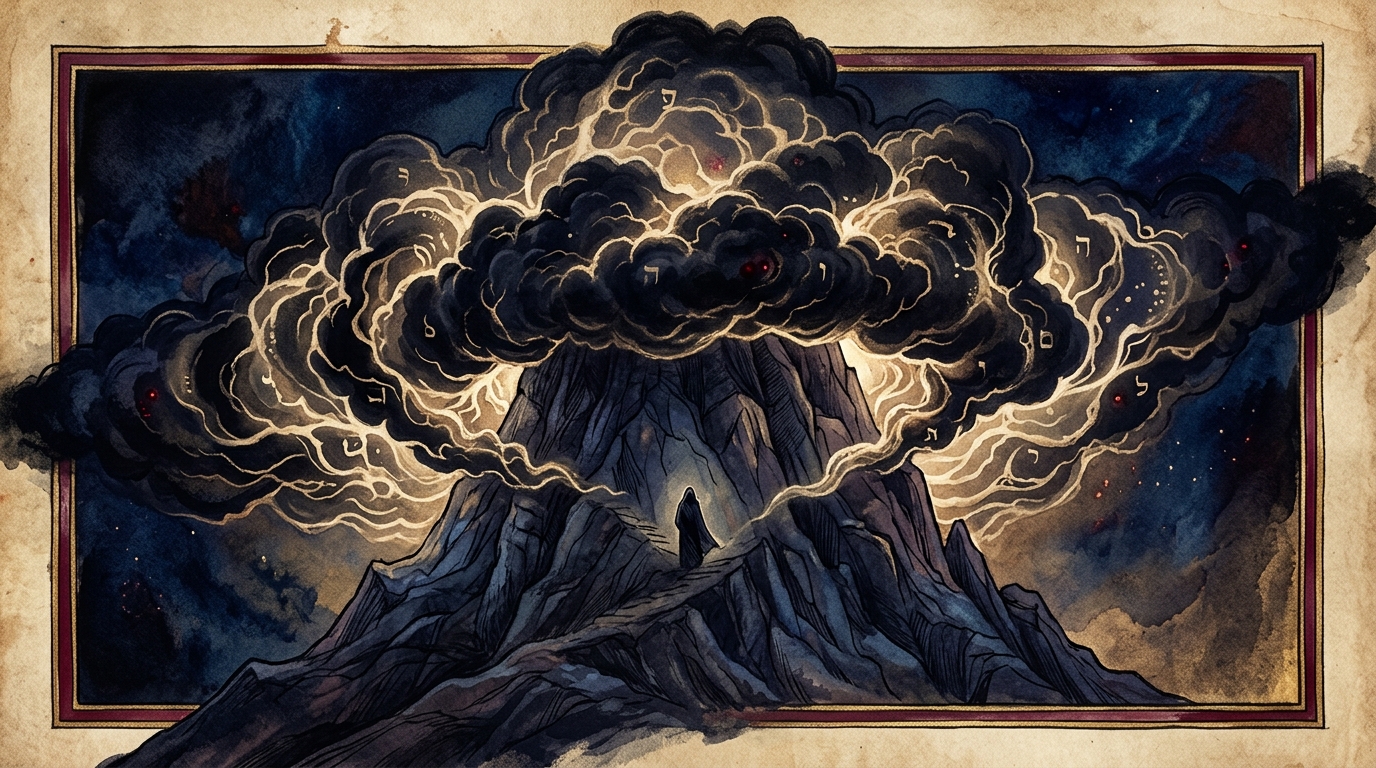
שָׁמְעָה וַתִּשְׂמַח, צִיּוֹן, וַתָּגֵלְנָה, בְּנוֹת יְהוּדָה-- לְמַעַן מִשְׁפָּטֶיךָ יְהוָה׃
Zion hears and is glad, and the daughters of Judah rejoice, because of your judgments, O Lord.
Go deeper
Seeing vs hearing, starting with physics
Think about it physically. When you see something, there's distance. Light bounces off the surface. You can look away, close your eyes, or walk around the thing. You stay separate from it.
Hearing is different. Sound enters your body. Sound goes through walls. You can't close your ears the way you close your eyes. To hear, you have to let the sound in. Which means hearing requires openness and a little vulnerability. That's why the most important prayer in Judaism starts with Shma Yisrael, "Hear, O Israel." Not "See." Seeing is spectator. Hearing is participant.
Jericho and the power of listening
Think of the walls of Jericho. Israel circled the city in silence for six days. No talking. Just listening. On the seventh day, one trumpet, one shout, and the walls fell.
For a week their eyes saw impossible stone walls. But the moment they finally heard and obeyed, the walls came down. Silent listening did what staring could not. The same principle runs through this verse. While the nations were outside seeing, Zion was inside hearing, and that's why Zion rejoices.
When your own voice goes quiet, God's voice gets room. When God's voice gets room, walls that looked permanent come down.
"Daughters of Judah": the receiving ones
The Hebrew mentions "daughters of Judah" alongside Zion. On the simple level, these are the smaller towns around Jerusalem. On a deeper level, they are images of everyone who receives God's presence and then carries it outward. God's light isn't hoarded by Zion. It passes through her, transforms her, and then goes out through her "daughters" into the world. This is the shape of the faithful community: receive, be transformed, proclaim.
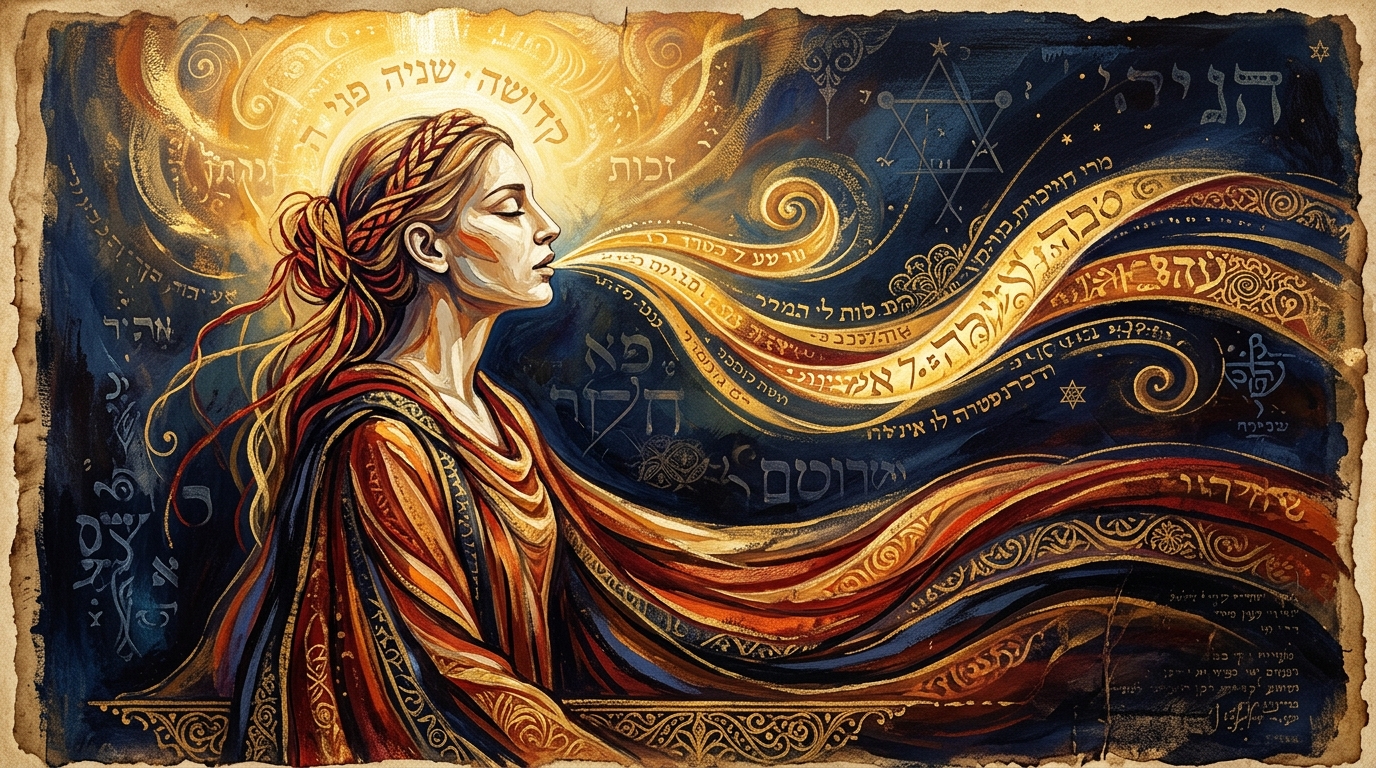
כִּי-אַתָּה יְהוָה, עֶלְיוֹן עַל-כָּל-הָאָרֶץ; מְאֹד נַעֲלֵיתָ, עַל-כָּל-אֱלֹהִים׃
For you, O Lord, are most high over all the earth; you are exalted far above all gods.
Go deeper
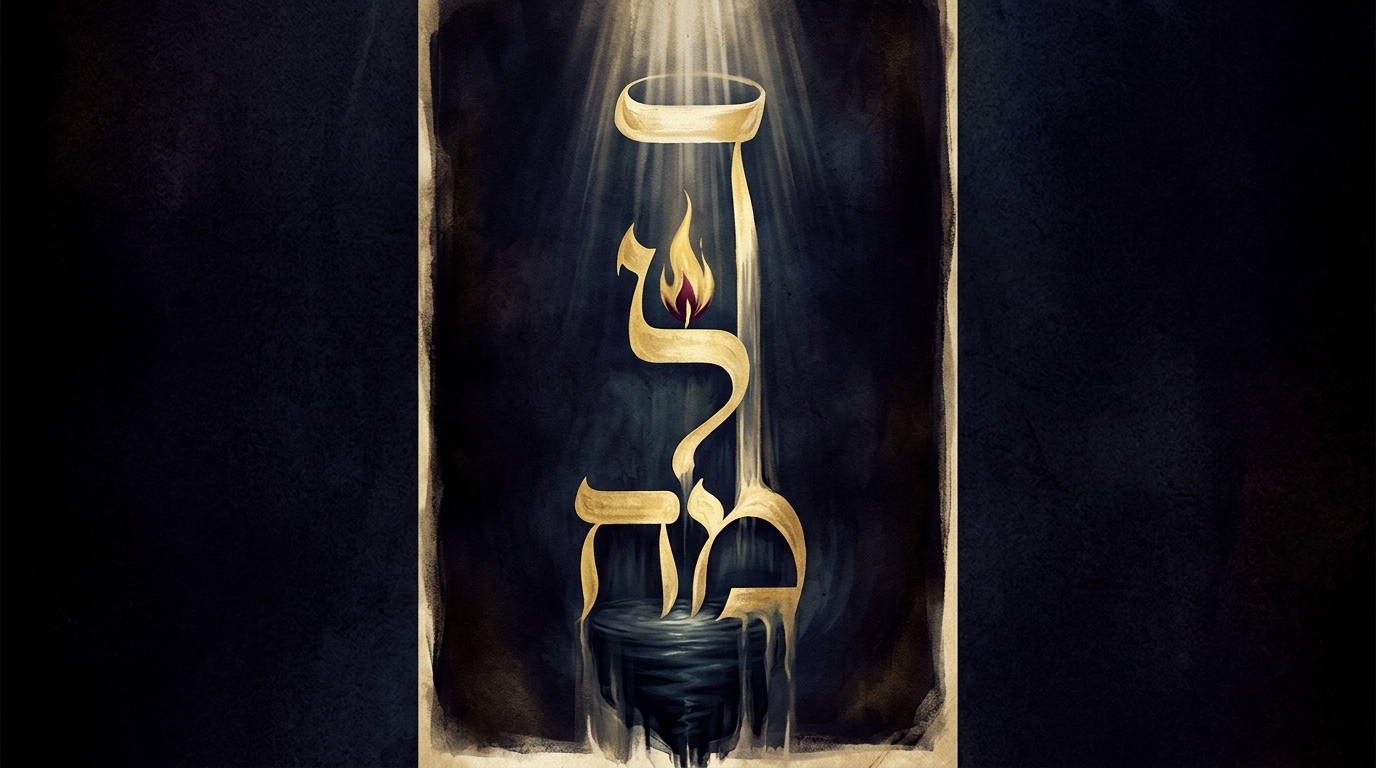
The letters of melech
The Hebrew word for king is melech (MEH-lekh), spelled with three letters: mem, lamed, kaf. Jewish contemplative tradition often reads the shapes and meanings of the letters themselves. Think of this as meditation on a word, not a dictionary lookup.
- Mem (מ) is associated with water and depth. The hidden, the womb, the place where things haven't formed yet. Darkness that's about potential, not absence.
- Lamed (ל) is the only letter that reaches above the line. Its root means "to learn" and "to teach." It's the letter of ascent and being taught.
- Kaf (ך) looks like an open palm or a cup. It represents capacity, receiving, being a vessel.
Read together, melech spells a journey:
From the depths (mem), through reaching and learning (lamed), into an open vessel that can receive (kaf).
Why this applies to us
"God reigns" is a statement about God. But the word melech is also a description of anyone who becomes a true vessel of God's light. You go down into the depths first. You reach upward in learning. You open your palms to receive. Then, and only then, what you carry has weight.
Notice the order. Most people want to skip to "kaf" (carrying, speaking, having voice, having authority) without going through "mem" (the depths, the dark, the silent humbling) and "lamed" (the long reach of actually being taught). But in God's economy you cannot skip the order. A voice that speaks without first going down and reaching up is just noise.
This is exactly what happened at Jericho. The depths (silent marching), the reaching (obedience to an odd command), the vessel (a shout that wasn't their own voice).
A king is the bridge between earth and heaven
Here's where it gets remarkable. A second language, formed a world away from Hebrew, drew the same picture. The old Chinese character for king is 王. It's three horizontal lines (Heaven on top, Earth on the bottom, Humanity in the middle) joined by a single vertical stroke running through all three. The classical reading, going back two thousand years, is plain: the king is the one who connects Heaven, Earth, and Humanity. The king is the vertical line.
So both alphabets, with no contact between them, say the same thing. A king is not a title. It's a function. The king is whoever actually joins the ground to the sky. The bridge.
That reframes this whole psalm. Verse 11 says light is sown in the dark soil. Verse 9 says the word for king is a map of descent, reaching, and receiving. Put them together and you get one motion, not two: the king is the one who goes down into the darkness of this world, gathers the light God already planted there (by living rightly, by transforming what's dark into what's bright), and carries it back up. Earth to Heaven. That is what makes someone a king by nature, not by appointment.
And the true King went first
The reason any of us can do this is that Christ did it absolutely. He is the true bridge, the ladder set between earth and heaven (the one Jacob saw in his dream, the one Jesus points to in John 1:51). He went all the way down into the darkness and carried it up into light. He didn't earn kingship by a crown placed on his head. He is King by nature, because he is the perfect vertical line joining the two.
Which means the lifetime exercise, the real one, is not to collect light for yourself. It's to become the bridge that light travels through into the world. Every time you take one piece of this world's darkness (a hard situation, a grudge, a fear, an injustice) and turn it into a piece of God's light (hope, grace, truth, life), you become, in that moment, a small king. A short stretch of vertical line. You are being conformed to His image. That is the whole point of a life.
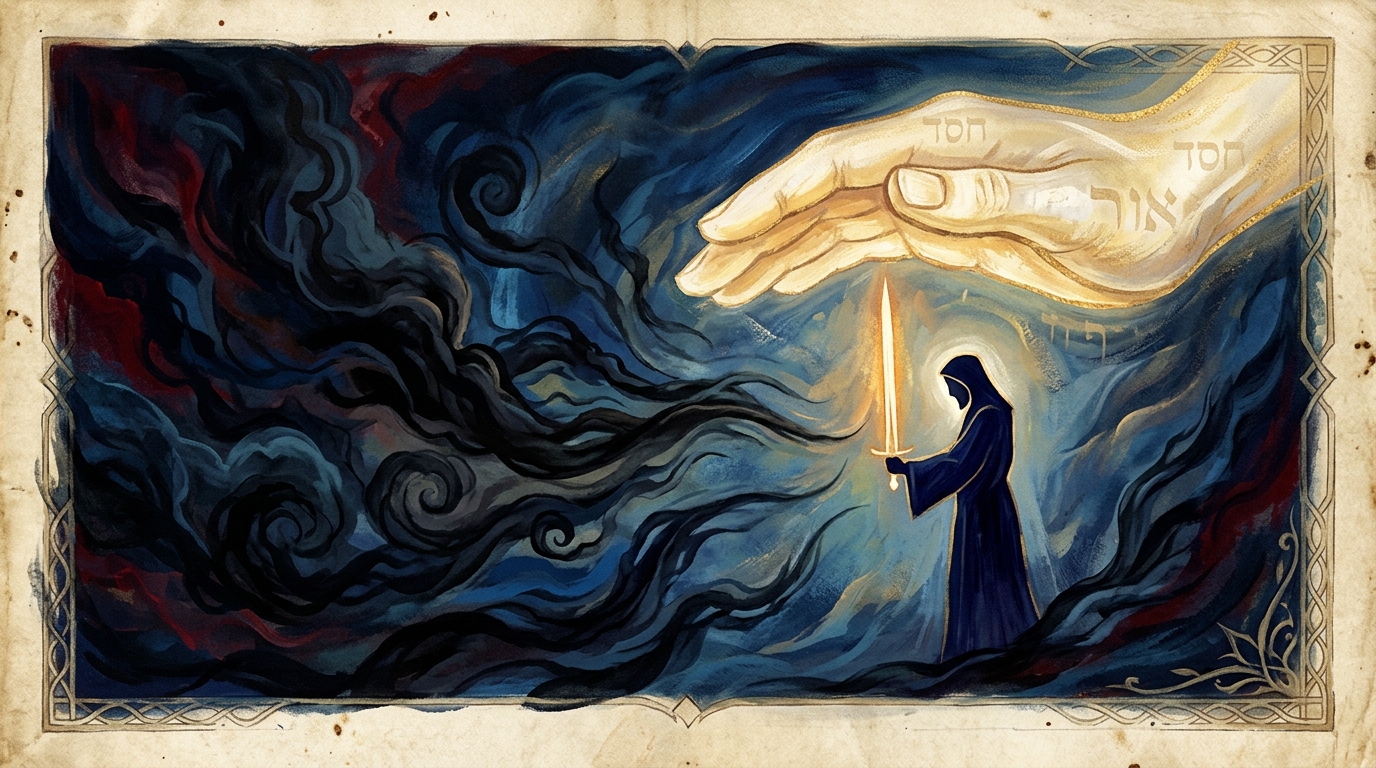
אֹהֲבֵי יְהוָה, שִׂנְאוּ-רָע: שֹׁמֵר, נַפְשׁוֹת חֲסִידָיו; מִיַּד רְשָׁעִים, יַצִּילֵם׃
O you who love the Lord, hate evil! He preserves the lives of his saints; he delivers them from the hand of the wicked.
Go deeper
Read the verse carefully
It says "hate evil," not "hate evil people." The cruelty, the lies, the dehumanization, the injustice. If you genuinely love God, you can't be calm about those things. Neutrality toward evil isn't gentleness. It's a quiet form of agreement. Love that doesn't flinch at evil slowly loses its shape, and eventually stops being love.
This is one of the hardest things to hold together in modern life, especially for people who want to be "nice." But the verse is clear. Love of God and a real, active no to evil come together. Take one out and the other dies.
The second half is what makes it livable
"He preserves the lives of his saints; he delivers them from the hand of the wicked." The second half of the verse is not a decoration. It's what makes the first half possible to obey. You're not asked to fight evil on your own.
Think of a child standing up to a bully because their father is right behind them. The courage doesn't come from the child's size. It comes from who is standing there. That's exactly what this verse is saying. You can let your light shine boldly, you can name evil, you can refuse to agree with lies, because your defender is the King of the whole earth.
You don't have to be afraid to stand against darkness. The Source of the light you carry is also your bodyguard.
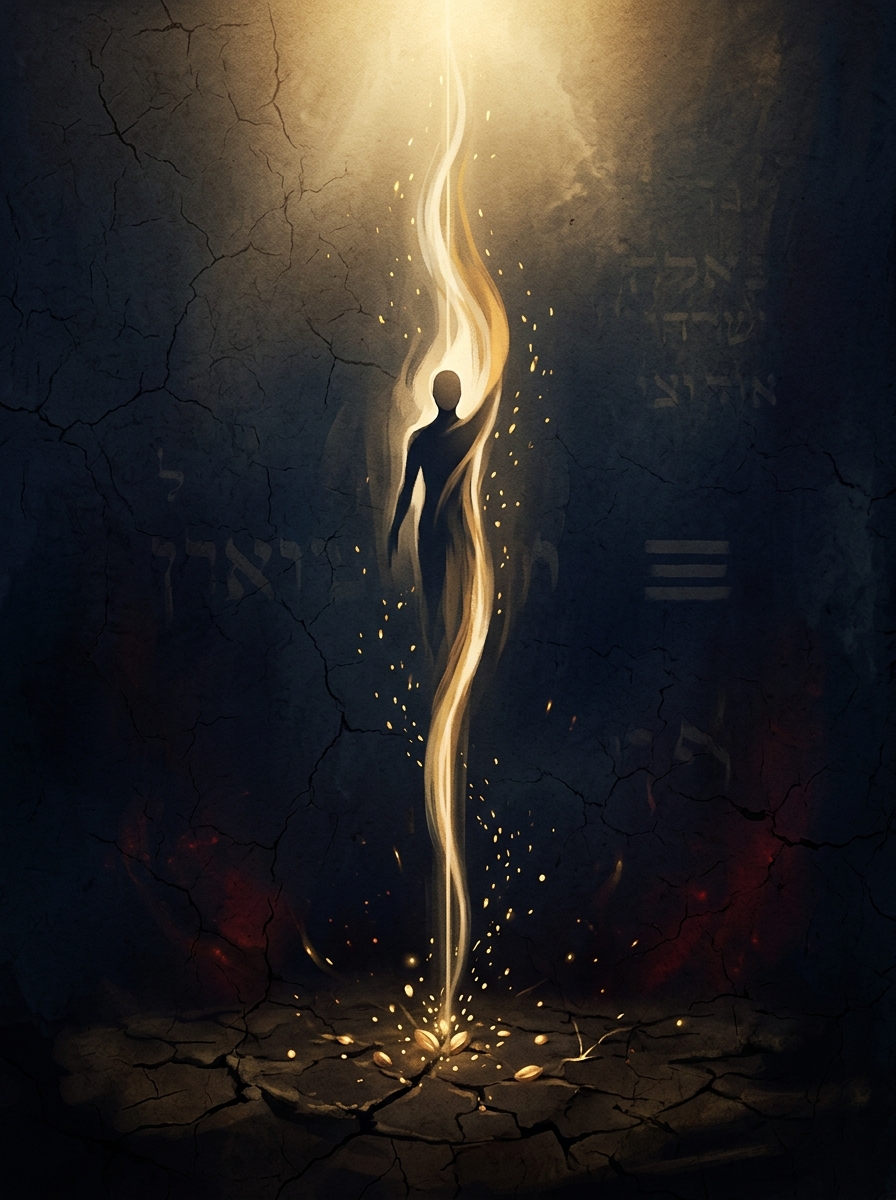
אוֹר, זָרֻעַ לַצַּדִּיק; וּלְיִשְׁרֵי-לֵב שִׂמְחָה׃
Light is sown for the righteous, and joy for the upright in heart.
Go deeper
Stop and notice how strange the image is
Light normally shines. It radiates, beams, streams. It doesn't get planted. You can't sow sunlight.
But that's what the Hebrew says. The word is zarua, meaning "sown, planted like a seed." A seed goes into the ground. Into the dark. For a long time it looks like death. Then slowly, invisibly, it pushes up.
The hidden light
Jewish mystical tradition has a name for this: or ha-ganuz (pronounced OR hah-gah-NOOZ), "the hidden light." The story goes like this. On day one of creation, before the sun even existed (the sun isn't made until day four), God created a light. But this original light wasn't physical. It was a light of deep spiritual seeing. God, foreseeing it could be abused, hid it. Where? Inside the Torah. Inside good deeds. Inside the hidden corners of everyday reality.
The implication is beautiful. Every time a person chooses rightly in a dark moment, a piece of that hidden light gets uncovered. The good act isn't just a good act. It's an excavation.
Dark circumstances are the soil, not the opposite
Here's the insight that's worth ten years of easier reading. Hard circumstances are not the opposite of light. They are the soil for it.
Think about how a young person matures. You want to protect your child from every hardship. But you also know, if you're honest, that a spirit only comes into its shape through choosing rightly under pressure. The gym is dark. The classroom is dark. The relationship is dark. Not because hardship is good in itself, but because faithfulness in the dark is the one thing that builds a spirit capable of carrying light.
So when you keep showing up even though no one notices. When you keep being kind to someone who doesn't appreciate it. When you keep telling the truth when lying would be easier. When you keep praying when heaven feels quiet. When you do the small right thing that costs you, and nothing about it looks like light: you are sowing light. In the world and in yourself at the same time. Two seeds in one act.
Darkness is not always the enemy of light. Sometimes darkness is the soil into which the light was sown.
"Upright in heart": whole-hearted people
The Hebrew yishrei lev describes people without a double bottom. Not divided. No hidden agenda. The English word "integrity" captures part of it. The light goes deepest into people who aren't split inside.
This is partly why the psalm adds "and joy for the upright in heart." The joy follows the integrity. People who are whole inside can receive joy in a way divided people can't. That joy isn't earned. It's just the natural fit of light with an undivided vessel.
שִׂמְחוּ צַדִּיקִים, בַּיהוָה; וְהוֹדוּ, לְזֵכֶר קָדְשׁוֹ׃
Rejoice in the Lord, O you righteous, and give thanks to his holy name!
Go deeper
Joy as a trained response
This isn't "happiness because everything is fine." That kind of happiness is fragile. This is the joy of someone who has seen how the story ends and lives inside that ending today. You trust the sowing because you trust the Sower. So you can give thanks before anything has grown above ground.
Notice that joy here is an instruction, not just a description. The psalm commands the righteous to rejoice. Joy is a discipline as much as an emotion. It's the practice of remembering who the King is.
"Give thanks to his holy name": the memory
The Hebrew word translated "name" in this verse is zecher, which really means "remembrance" or "the memory of the name." We don't see God's full face in this life. We have something else: His character, His acts, the memory of what He's done. That's enough to build a whole life of thanksgiving on.
When you thank God by name, you're not flattering Him. You're rehearsing His character out loud, so that your own heart catches up to what's true.
Notice the descent
The psalm started with God reigning over the whole cosmos, and ends with a single person in a single moment saying thank you. That's the whole movement of the gospel in miniature. The King came down. Through clouds, through fire, through the collapse of idols, through the silence of hearing, all the way into your heart where you can open your mouth and speak His name.
The throne was always coming here. Your "thank you" is what the whole psalm was walking toward.
The whole picture, one more time
The psalm moves in three parallel patterns.
Nature melts (what looked permanent lets go of its false shape). Idols are shamed (what we over-trusted gets exposed as hollow). Zion hears and rejoices (the faithful find themselves by letting God's voice in).
A real encounter with God isn't about special effects. It's that His light works in the dark of the earth, the dark of history, the dark of a single human heart, and one day, it rises.
When the true King becomes visible, false powers lose their grip, darkness becomes soil for light, and faithfulness turns into joy.